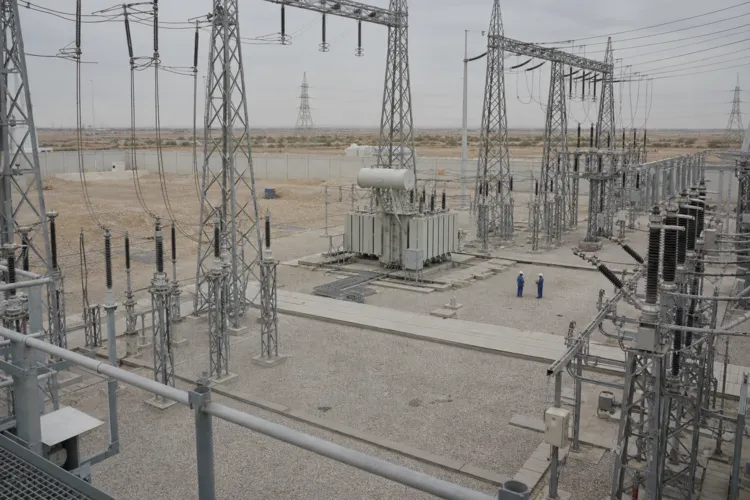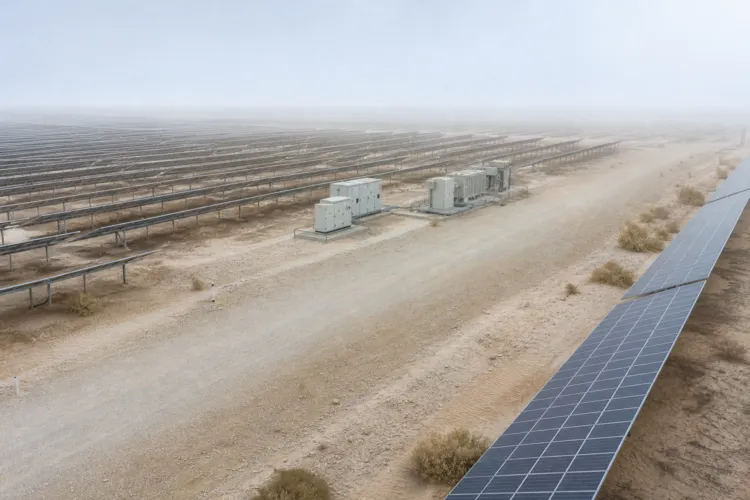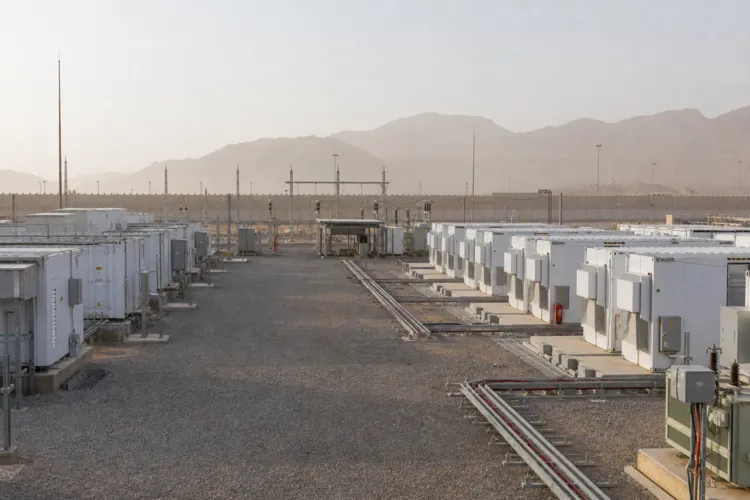
Saudi Arabia put the spotlight on wind pricing in October 2025 when it awarded a major project under the sixth round of the National Renewable Energy Program (NREP). The flagship award was the Dawadmi Wind IPP Plant in Riyadh Province. The project is sized at 1,500 MW. The Saudi Power Procurement Company (SPPC) said the project achieved a world record for the lowest levelized cost of electricity (LCOE) for wind energy, at 1.33803 US cents per kWh, also stated as 5.01760 halala/kWh. Windpower Monthly also reported Saudi Arabia awarded a power deal for a 1.5 GW wind farm that it said achieved a new record for the lowest price ever awarded for wind.
The award went to a consortium of Korea Electric Power Corporation (KEPCO), Nesma Renewable Energy Company Ltd., and Etihad Water and Electricity Company PJSC (EtihadWE). The same NREP round awarded five large-scale wind and solar projects totaling 4,500 MW. Alongside the 1,500 MW wind project, four solar projects totaling 3,000 MW were also awarded, including Najran (1,400 MW), Ad Darb (600 MW), Samtah (600 MW), and As Sufun (400 MW). SPPC described these outcomes as evidence of competitive generation costs, and it framed the momentum as linked to the Kingdom’s financing and development models and growing investor confidence in its renewable energy market.
Why the Dawadmi Tariff Could Go So Low
The Dawadmi pricing story is also a procurement and contract story. SPPC is described as the principal buyer for the awarded projects, with responsibilities that include pre-development studies, tendering, and executing Power Purchase Agreements (PPAs) with developers. SPPC also provides the contractual offtake and payment guarantees for electricity generated by the Kingdom’s wind and solar projects. In a separate investor-focused note, Merifund Capital highlighted a 25-year PPA for the Dawadmi project and characterized the contracted tariff as a live benchmark for contracted power pricing. That note also cited a build cost of $839 million, projected sales of $1.5 billion, and dividend capacity of $244 million in its analysis of the project’s economics.
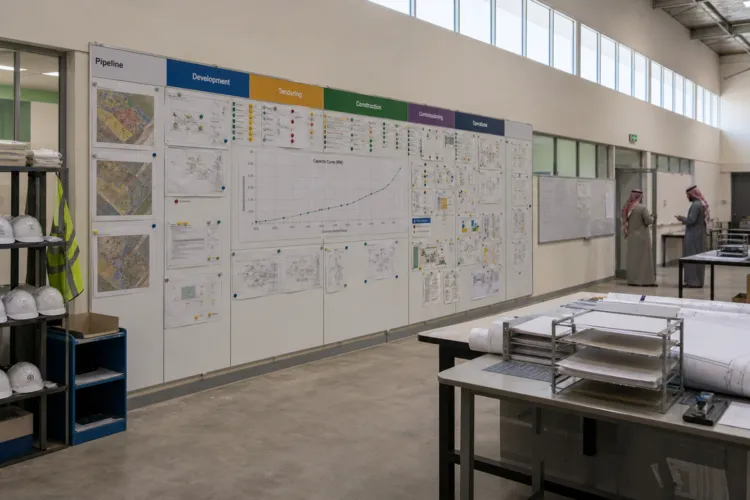
The sixth-round awards sit inside a larger pipeline of tendered and contracted capacity. SPPC stated that by the end of 2025, total capacity of tendered projects is expected to reach 64 GW. Following completion of the sixth round, contracted capacity totals 43.2 GW, of which 12.3 GW are already operational. Separate market reporting also points to how pricing pressure can shape bidding. Mordor Intelligence notes record-low tariffs below USD 0.018/kWh and says local-content thresholds now exceed 35%, connecting aggressive bidding with financing innovation and domestic production of modules, inverters, and wind turbines inside the Kingdom. In this context, the Dawadmi wind farm in Saudi Arabia becomes a concrete example of how scale and structured auctions can compress prices.
Zooming out, Saudi Arabia’s wind market is also described as expanding over time. IMARC Group data cited in a wind market overview puts Saudi Arabia’s wind power market size at USD 913.6 million in 2025, with an expectation to reach USD 1,374.9 million by 2034, at a CAGR of 4.65% during 2026–2034. Another policy summary adds context on how wind scaled compared with solar: it states that until 2024 the Kingdom operated a single utility-scale wind farm, the 400 MW Dumat Al Jandal project in Al Jouf, online since August 2021. Against that backdrop, the Dawadmi award is not just about a number on a bid sheet. It also signals how quickly Saudi procurement rounds can shift the reference point for wind tariffs.
Where is the Dawadmi wind project located and how large is it?
What record-low tariff was reported for the Dawadmi wind farm in Saudi Arabia?
Who won the Dawadmi Wind IPP award?
What is known about the Dawadmi project’s contract structure and economics?
How does the Dawadmi award fit into Saudi Arabia’s wider NREP pipeline?
Talk to us for your needs in:
-
Energy Efficiency Strategy & Feasibility
-
Renewable Energy Strategy & Investment Advisory
-
Digital Energy & Smart Grid Strategy
-
Market Entry Strategy
-
Sustainability & Impact Strategy
-
Energy Project Governance & PMO Advisory
-
Energy Market Research
-
Energy Stakeholder & Customer Research
-
Energy Market Intelligence
-
Energy Feasibility & Investment Assessment
-
Energy Sector Benchmarking & Performance Strategy