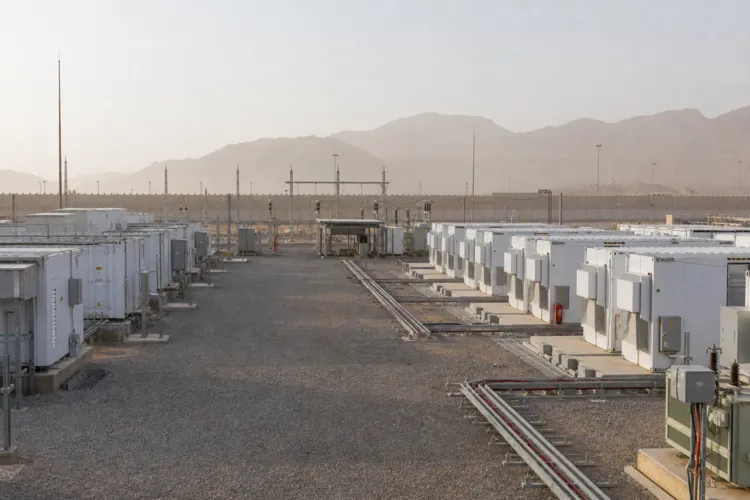
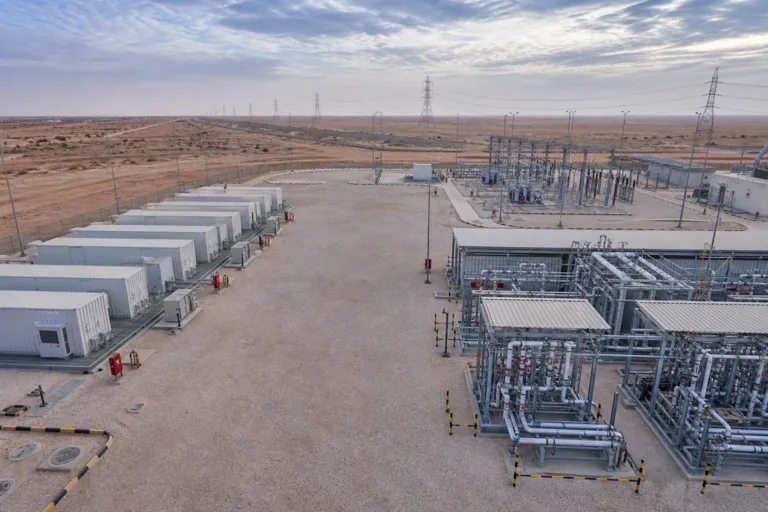
Saudi Arabia is accelerating energy storage to support a cleaner, more reliable power system under Vision 2030 and related programs. Nexdigm notes a national target of 48 GWh of battery energy storage capacity in the coming years, alongside a Ministry of Energy goal to make renewables around 50% of the electricity production mix by the coming decade. As variable solar and wind expand, storage becomes a practical tool for balancing generation and demand, reducing renewable curtailment, and improving grid stability for industrial growth, cooling demand, data centers, and giga-project electricity needs. In parallel, Mobility Foresights projects the Saudi Arabia grid energy storage market to grow from USD 14.2 billion in 2025 to USD 52.7 billion by 2032, a 20.6% CAGR, reflecting broad adoption across transmission, distribution, and behind-the-meter use cases.
The shift toward longer discharge durations is central to long duration energy storage Saudi Arabia planning for reliability toward 2030. IndexBox describes the flow battery market as being in an early commercial phase in 2026, driven by the need for 4–12 hours of storage to firm solar and wind. Total installed flow battery capacity is estimated at 50–80 MWh as of early 2026, mainly from pilot and demonstration projects. Demand today concentrates in utility-scale grid storage and renewable integration, while commercial and industrial backup and microgrids are emerging for remote mining and desalination sites. IndexBox also projects the total addressable market for long-duration storage in Saudi Arabia to exceed 5–8 GWh by 2035, signaling that the early pilots are meant to scale into mainstream grid assets.
Beyond Lithium: Flow Batteries and Zinc-Air as Multi-Hour Workhorses
Flow batteries are being positioned as a practical “beyond lithium” option when duration rises above typical 2–4 hour battery systems. IndexBox reports that Vanadium Redox Flow Batteries (VRFB) account for over 85% of installed flow battery capacity in Saudi Arabia, citing long cycle life of 20+ years and safety advantages in high-temperature desert environments. Installed costs for flow battery systems in Saudi Arabia are estimated at USD 350–550 per kWh of energy capacity for 4-hour systems, with electrolyte costs representing 30–40% of total cost. For 6-hour VRFB systems, IndexBox estimates a levelized cost of storage of USD 0.12–0.18 per kWh, described as competitive with lithium-ion for durations above 4 hours. Developers are also exploring electrolyte leasing models that IndexBox says can reduce upfront capex by 25–35%, which may matter as projects get larger.
Zinc-air is another emerging route for longer durations. IndexBox’s zinc-air report states Saudi Arabia plans to install 50–60 GW of renewable capacity by 2030, with solar PV accounting for the majority, which increases the value of safe, low-cost long-duration shifting. The same source places complete zinc-air storage system prices at USD 180–280 per kWh of energy capacity in 2026, with expectations of a 30–40% reduction by 2030 as manufacturing scales and air electrode durability improves. Zinc-air’s positioning depends on proving performance under Saudi conditions and reaching cost parity with lithium-ion at 8+ hours. IndexBox also notes that, as of 2026, Saudi Arabia has no domestic production of zinc-air cells, stacks, or key components, so partnerships and system integration play an early role in commercialization.
Scaling long-duration storage is also a delivery and supply-chain story. IndexBox highlights that the flow battery market is structurally import-dependent as of 2026, with no domestic vanadium mining or electrolyte production; stack components, membranes, and power conversion systems are sourced from international suppliers in China, Japan, Germany, and the United States. The same report lists bottlenecks such as vanadium feedstock price volatility, specialized membrane capacity, skilled EPC firms, and grid interconnection certification. Even so, it points to procurement momentum: government mandates under NREP and the Saudi Green Initiative are creating a pipeline of 200–400 MWh of flow battery projects by 2028, with a first gigawatt-scale tender expected by 2030. Taken together, these signals suggest Saudi Arabia’s storage buildout will be technology-diverse, pairing lithium where it fits with multi-hour VRFB and zinc-air where longer duration and safety are decisive.
Why is Saudi Arabia focusing more on long-duration storage, not only lithium-ion?
How much flow battery capacity is installed in Saudi Arabia today?
What makes VRFBs prominent in Saudi Arabia’s flow battery deployments?
What are the current cost ranges cited for zinc-air and flow battery systems in Saudi Arabia?
What is the pipeline for flow battery projects leading up to 2030 in Saudi Arabia?
Talk to us for your needs in:
-
Energy Efficiency Strategy & Feasibility
-
Renewable Energy Strategy & Investment Advisory
-
Digital Energy & Smart Grid Strategy
-
Market Entry Strategy
-
Sustainability & Impact Strategy
-
Energy Project Governance & PMO Advisory
-
Energy Market Research
-
Energy Stakeholder & Customer Research
-
Energy Market Intelligence
-
Energy Feasibility & Investment Assessment
-
Energy Sector Benchmarking & Performance Strategy