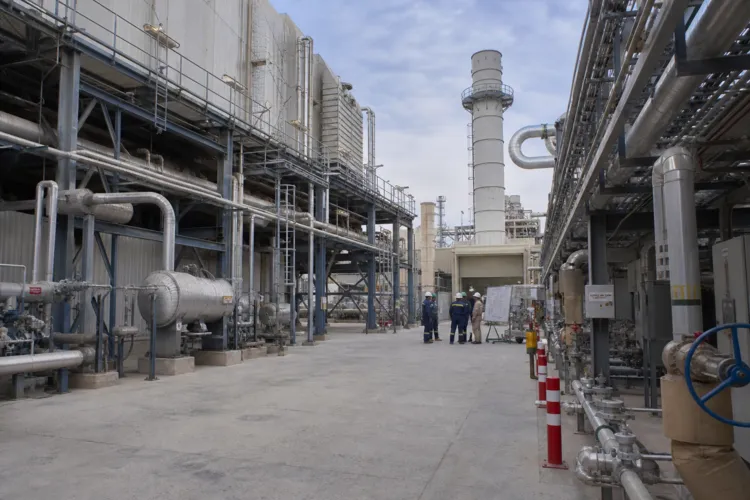
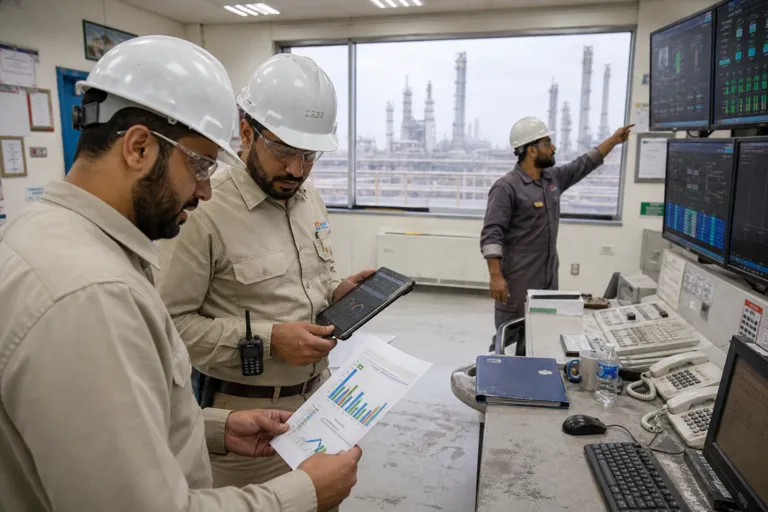
Industrial decarbonization in Saudi Arabia is not only about swapping fuels. It is also about lowering energy intensity, which Our World in Data defines as energy consumed per unit of GDP. Lower energy intensity means less energy is needed for the same level of economic output. This matters because emissions can fall in two ways: using less energy and using lower-carbon energy. For heavy industry, that means combining efficiency with cleaner power and targeted abatement for residual emissions, rather than assuming sector shifts alone deliver fast results.
Saudi evidence suggests policymakers should be careful about “automatic” decarbonization narratives. A Saudi Arabia study using annual data from 1970–2022 finds that once energy intensity is controlled for, structural change toward services has no robust short-run association with carbon intensity. The same study also reports that urban population scale is associated with higher carbon intensity in already high-intensity regimes at upper-middle quantiles (τ = 0.7–0.8), but not elsewhere in the distribution, and it finds no structural break around 2014, 2016, or 2020. In practice, that points planners back to the basics: manage demand growth, cut energy intensity, and decarbonize the energy mix.
What It Takes to Lower Energy Intensity in Heavy Industry
One practical lever is to make low-carbon electricity easier for manufacturers to buy and to plan around. A Saudi industrial competitiveness preprint recommends industrial renewable procurement through bankable structures such as long-term offtake/PPAs and green tariffs. The logic is direct. Renewables can offer lower and more predictable generation costs, which can reduce manufacturing input costs and help decarbonize products for export markets. The same source notes that energy use can look “good” when it reflects expansion, but it can look “bad” when it reflects high energy intensity and weak efficiency, making efficiency upgrading and innovation critical to long-run competitiveness.
For emissions that cannot be eliminated quickly in energy-intensive processes, CCS is positioned as a system tool. A ScienceDirect review notes techno-economic assessments indicating that a 2035 target of capturing 44 million tonnes per annum of CO₂ across industrial sectors is feasible at a volume-weighted average cost of $52/tCO₂. Another CCS-focused assessment emphasizes that a national-scale marginal abatement cost curve should integrate capture, transportation, and storage costs together, because CCS projects incur both transport and storage costs simultaneously. It also highlights the value of CCS hubs and clusters for infrastructure optimization, including pipeline routing and storage site prioritization.
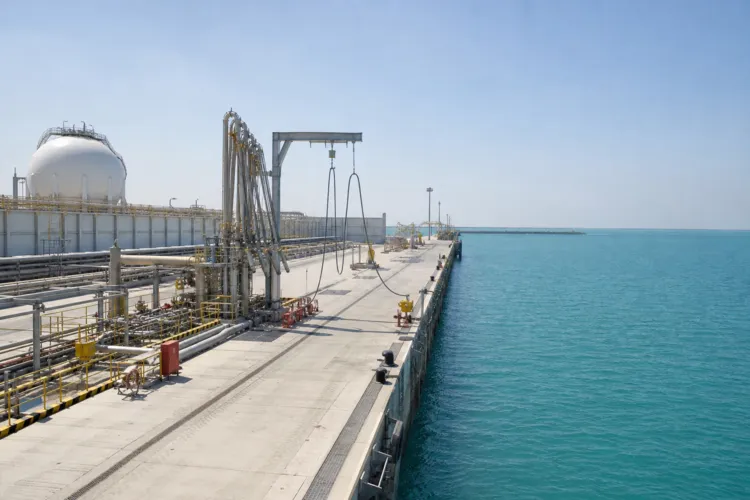
Near-term hub design and industrial clustering are repeatedly cited as the implementation pathway. One market-focused source describes the Jubail CCS Hub as designed to capture 9 million tonnes of CO₂ annually starting in 2027, and frames Jubail and Yanbu as international CCS hubs serving clustered petrochemical, steel, and cement producers with shared infrastructure. The same source states that Saudi Arabia’s refining sector generates approximately 49.5 million tonnes of CO₂ emissions annually across nine refineries, with individual facilities producing between 2.6 and 9.4 million tonnes per year. Separately, a Saudi energy-transition review reports that Saudi Aramco’s flaring minimization programs prevented 80 million tonnes of CO₂ equivalent from being emitted over recent years. Together, these figures show why lowering industrial energy intensity in Saudi Arabia must be paired with scalable abatement where efficiency and electrification are not enough.
What does “industrial energy intensity” mean for Saudi Arabia’s decarbonization plans?
Does shifting from industry to services automatically reduce carbon intensity in Saudi Arabia?
What CCS scale is being discussed for Saudi industrial sectors by 2035?
What is the planned capture volume for the Jubail CCS Hub?
What figures are reported for refining-related CO₂ emissions in Saudi Arabia?
Talk to us for your needs in:
-
Energy Efficiency Strategy & Feasibility
-
Renewable Energy Strategy & Investment Advisory
-
Digital Energy & Smart Grid Strategy
-
Market Entry Strategy
-
Sustainability & Impact Strategy
-
Energy Project Governance & PMO Advisory
-
Energy Market Research
-
Energy Stakeholder & Customer Research
-
Energy Market Intelligence
-
Energy Feasibility & Investment Assessment
-
Energy Sector Benchmarking & Performance Strategy